

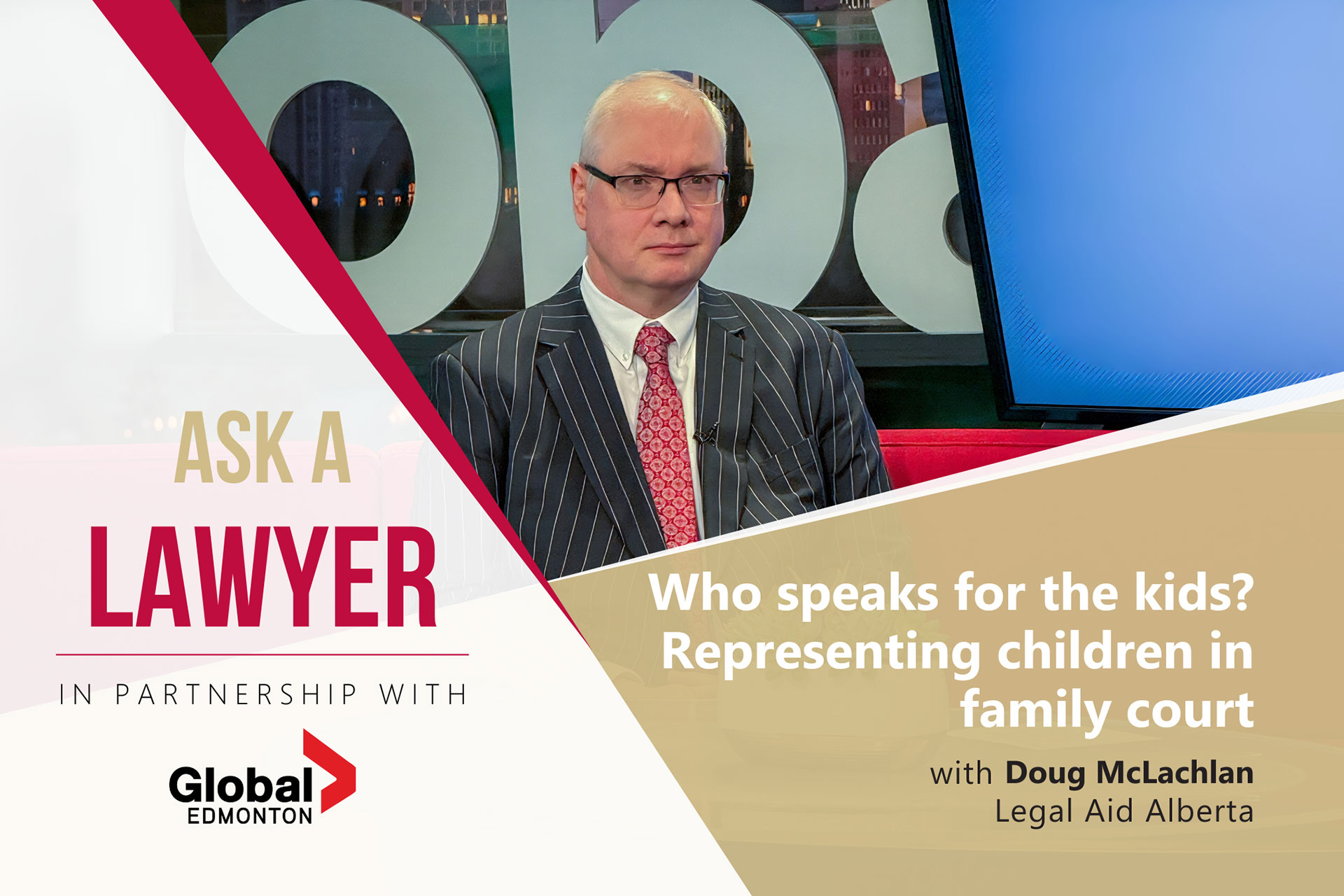
Legal Aid Alberta staff lawyer Douglas McLachlan explains how children and youth are represented in court.
For most Albertans, Family Day is a chance to take a break and spend quality time with our loved ones. But for many families, reality is much different, especially when a child’s safety or home environment is at risk.
When families head into court for divorce of custody, the loudest voices are often the adults — but what about the children living with the consequences?
Legal Aid Alberta staff lawyer Douglas McLachlan joined Global Edmonton to explain how the courts ensure children and youth are heard, even in the most complex circumstances.
Watch the interview
Tell us about child’s counsel and family law. What is that and what does that work look like?
Well, it covers a lot of things. When you get into a high-conflict family dispute, custody or access and the like, judges want to know what the child — the most impacted person in that situation — wants. So, judges will appoint independent counsel for children. That is my role, to let the judge know about the child’s views and preferences in a way that might not otherwise come out.
Are you part-lawyer and also part-counsellor?
No. I am a lawyer. I get specialized training to help me understand child brain development, to understand a little bit about the trauma that kids are going through. But my role is as a lawyer.
What are some of the differences when it comes to representing adults versus representing youth?
Well, on the surface, there’s a lot of similarities because you’ve got to talk to your clients, and perhaps more importantly, you have to listen to them. But you have to listen to what they’re saying as they’re saying it at their level.
So my role might involve meeting with a child client, talking across the table or talking across the couch, like we’re doing here, depending on their age and maturity. Or, maybe I’m down on the ground playing Lego with them trying to find out where they’re at and what their views might be. Then I relay that to a court or to other lawyers on the file.
So, you mentioned the importance of the judge wanting to hear from all voices. But in your role, how do you ensure that the voice of your clients is properly translated to that level?
That is a challenge, and it comes after a bit of practice and experience, but also trusting the children to be open with you. Children get a voice, but they don’t have a choice, and that’s no different than any other client in a court proceeding.
As kids get older and more mature, the weight of their voice gets louder. A 15-year-old is treated a little differently than a five-year-old when we’re talking about extracurricular activities or what school the kid wants to go to.
“My favourite clients are my kid clients.”
— Douglas McLachlan, Legal Aid Alberta staff lawyer
Is domestic violence and divorce the main focus of the work that you do in representing children, or are there other issues or factors at play here?
That’s principally it, but it sometimes might be things like medical care for the child — how do they feel about going to see a counsellor? That might not be my skillset, but that doesn’t mean the child doesn’t have views or preferences about going to see a counsellor or a therapist.
It must be a unique aspect of law to practice representing kids. What are some of the challenges and the rewards of the work?
Well, I’ll talk about the rewards first, because I have practised for 25 years, but my favourite clients are my kid clients. They just are. But yes, it is a challenge because they’re going through a lot and they’re just kids. So, you want to be respectful, give them the space that they need and always make sure that you’re making an extra effort to see things from their point of view.
The challenge is to make sure that you can do an effective job and again, convey those views and preferences clearly and unambiguously to the court in those situations that call for it.
Need legal advice?
Learn more about Legal Aid Alberta services in family law, child welfare, domestic violence, immigration and youth and adult criminal defence.